
Petrol and diesel prices were hiked by 80 paise a litre each on Saturday, the fourth increase in five days as oil firms passed on to consumers the spike in cost of raw material. Petrol in Delhi will now cost Rs 98.61 per litre as against Rs 97.81 previously while diesel rates have gone up from Rs 89.07 per litre to Rs 89.87, according to a price notification of state fuel retailers. All the four increases since the ending of a four-and-half-month long hiatus in rate revision on March 22, have been of 80 paise a litre.

Securities and Exchange Board of India (Sebi) has tweaked the benchmarking norms for mutual fund (MF) schemes in a bid to bring more uniformity. The regulator has introduced a two-tiered structure for benchmarking of schemes and all the benchmarks followed should be total return index (TRI). According to the circular, the first-tier benchmark shall be reflective of the category of the scheme, and the second-tier benchmark should be demonstrative of the fund manager's investment style or strategy within the category.

American brokerage firm Morgan Stanley on Thursday sharply cut its India FY23 real GDP growth estimate to 7.9 per cent, mainly due to the impact of the Russia-Ukraine conflict on oil prices. Analysts at the brokerage also raised their inflation forecast to 6 per cent - the upper end of the tolerance band for the RBI - and flagged stagflation risks because of the ongoing events. "We believe that the ongoing geopolitical tensions exacerbate external risks and impart a stagflationary impulse to the economy," they said. It can be noted that stagflation involves a stagnancy in output or growth, coupled with high inflation.

While sales in the domestic market declined 4.2 per cent during the April-July period, exports grew steadily at 9.5 per cent during the same period.

Pressure on credit quality of Indian corporates is on the rise suggesting a decline in creditworthiness, a study by rating agency Crisil has revealed.

Real estate development on Mumbai airport land and the work on Navi Mumbai airport have been inordinately delayed, which have prompted rating downgrades and raised questions on its financial capabilities. It is also trying to stave off Adani group's entry as a shareholder in the Mumbai airport project.

...followed by financial services, IT, and sales and marketing.
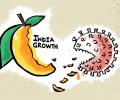
Former finance secretary Subhash Chandra Garg went on to say that the 2020-21 fiscal will go down in the history of India as the year when India got way-laid from its story of three decadal outstanding growth.
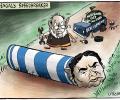
'Our government has created 10 million jobs when the Indian unemployment rate is at a 45-year high.'

Lenders have reported a surge in their bad loans in the six months to March after an asset quality review ordered by the central bank.

Petrol price on Monday was hiked by 30 paise a litre and diesel by 35 paise, taking the total increase in rates in the last one week to Rs 4-4.10 per litre. Petrol in Delhi will now cost Rs 99.41 per litre as against Rs 99.11 previously while diesel rates have gone up from Rs 90.42 per litre to Rs 90.77, according to a price notification of state fuel retailers. Rates have been increased across the country and vary from state to state depending upon the incidence of local taxation.

Ninety-nine companies, which also include some unlisted ones, have more than Rs 100 crore each of minimum alternate tax credit on their books, cumulatively adding up to Rs 75,000 crore. By utilising MAT credit, many companies will be able to bring down their effective tax cost.

The new IIP series based on the new base year, is expected to lead to better capturing of ground data
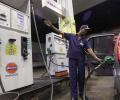
Petrol price on Sunday was hiked by 50 paise a litre and diesel by 55 paise, taking the total increase in rates since resumption of daily price revision less than a week back to Rs 3.70-3.75 per litre. Petrol in Delhi will now cost Rs 99.11 per litre as against Rs 98.61 previously while diesel rates have gone up from Rs 89.87 per litre to Rs 90.42, according to a price notification of state fuel retailers. Rates have been increased across the country and vary from state to state depending upon the incidence of local taxation.
On February 24, when Vladimir Putin announced a military operation on Ukraine, few would have thought that Indian government-owned GAIL India would feel the impact. The tensions over gas supplies were essentially a Europe-Russia problem, related to the sanctions western economies imposed on Moscow. But the EU depends on Russian imports for 40 per cent of its gas stocks, an over-dependence that Russia has underlined with Kremlin-owned Gazprom cutting its supplies through the Nord Stream 1 pipeline to 20 per cent, citing maintenance issues.

Size matters on the road. Small is not dominating India's car market any more. The share of cars priced up to Rs 5 lakh in the passenger vehicle market has fallen to 10.5 per cent in the first 11 months of 2021-22, compared with 26 per cent in 2018-19 (FY19), the lowest in four years, according to data from industry sources. Even the share of those in the price range between Rs 5 lakh and Rs 7.5 lakh has dropped to 32.4 per cent in the same period, from 34.9 per cent.

Experts say the focus is on preserving liquidity as there is uncertainty over the duration and impact of the 21-day nationwide lockdown imposed to check the spread of COVID-19.

Stock market investments are always said to involve risks and people who made big fortunes often made headlines as scamsters, leading to Dalal Street always being looked at with suspicion, but Rakesh Jhunjhunwala was broadly an exception. Jhunjhunwala, a partner at RARE Enterprises, who rose to amass a $5.8 billion fortune and earn the tag of the country's biggest individual investor, leaves behind a relatively cleaner slate, as was seen in the most common description for him -- 'India's own Warren Buffett'. Unlike names like Harshad Mehta and Ketan Parekh, whose rise in fortunes in post-liberalised India was tainted with scam links, the newest 'Big Bull' in the more-regulated market had lesser baggage on this front.

Initial projections, at least, suggest that things are not looking good enough for India Inc, as margins are expected to soften further.

Most analysts expect growth in the sales of Nifty-50 companies to decelerate, albeit marginally, in the quarter ended December compared to the corresponding period of 2013-14, with metals and real estate companies pulling down earnings.

While companies have not launched too many products in rural areas of late, easy financing has helped push up demand.
Experts say local demand, government policies in retail and refining sector are attracting foreign players.

In the early part of 1800, a 30-acre plot next to Fort Gloster on the banks of river Hooghly in Howrah district of Bengal was the nerve centre of industrial activity; it housed India's first steam-powered cotton mill, Bowreah Mills, which was set up by a British merchant and went on to become a hub of factories - a rum distillery, foundry, cotton yarn factory, an oil mill and a paper mill, et al. Spearheaded by Dwarkanath Tagore, the industrialist grandfather of Rabindranath Tagore, the commercial complex was possibly the first of its kind in the country. Close to 200 years later, after much ebb and flow of history, the hub is set for a resurgence of sorts.

'The approach today is, instead of giving loans to 100 MSMEs, let us give one loan to a big-ticket corporate.' 'And so many of these big fish deceived the banks and the banks are in the doldrums now with high NPAs.'

The number of carbon credits or certified emission reduction (CERs) issued for a cut in the release of greenhouse gases into the environment is set to triple in India over the next three years, due to a rising number of claims from rapidly growing renewable energy (RE) projects.

Ace investor Rakesh Jhunjhunwala on Thursday said real estate developers are afflicted with very low return on capital as compared to bluechip stocks. Jhunjhunwala, who runs RARE Enterprises and is set to be a major shareholder in an upcoming airliner, said only the affordable housing developers can look at listing because of the volumes which they can deliver. It can be noted that very few developers like Macrotech Developers formerly Lodha, and DLF are listed on the bourses. Jhunjhunwala cited the case of DLF, saying the stock price plummeted to Rs 80 from Rs 1,300 per piece to illustrate the risks associated.

The earnings are, however, expected to be down around 2 per cent on a sequential basis due to pent-up demand getting exhausted and the adverse impact of rising metals and energy prices on consumer goods and manufacturing companies.

If more commodities which have seen a sharp rise in MSP are to be procured, such as pulses, oilseed and cereals, there could be a storage problem. Also, if state-owned Cotton Corporation of India joins in, this problem will aggravate.

After hike in rates of petrol, diesel and LPG, the prices of CNG and cooking gas piped to household kitchens (PNG) in the national capital were hiked on Thursday by Re 1. CNG price in NCT of Delhi has been increased to Rs 59.01 per kg from Rs 58.01, according to the information posted on the website of Indraprastha Gas Ltd - the firm which retails CNG and piped cooking gas in the national capital. This is the third increase in CNG rates this month, which follows a spike in input (natural gas) prices across the globe.

India's top fuel retailers IOC, BPCL and HPCL together lost around $2.25 billion (Rs 19,000 crore) in revenue for keeping petrol and diesel prices on hold during elections in five states, including Uttar Pradesh, Moody's Investors Services said on Thursday. State fuel retailers did not revise petrol and diesel rates for a record 137 days despite prices of crude oil (raw material for producing fuel) rising to $120 per barrel compared to around $82 in early November when the hiatus began. "Based on current market prices, the oil marketing companies are currently incurring a revenue loss of around $25 (over Rs 1,900) per barrel and $24 per barrel on sale of petrol and diesel, respectively," Moody's said in a report.
The specific characteristics of the Indian growth slowdown are poised, according to some observers, to stall a major structural change to the Indian economy.

Hit by the third wave of the COVID-19 pandemic and soaring fuel prices, airlines are flying towards record losses with a likely loss of a whopping Rs 20,000 crore for the full fiscal year, warns a report. The airlines are flying towards their steepest-ever net loss of over Rs 20,000 crore this fiscal, which will be 44 per cent more than Rs 13,853 crore they bled last fiscal, Crisil said in a report. This will push back the industry's recovery beyond fiscal 2023, the report based on three large listed airlines--Indigo, Spicejet, and Air India--which together command 75 per cent of the domestic traffic, warned.
Petrol and diesel prices were hiked by 80 paise a litre each on Wednesday, taking the total increase in rates in 16 days to Rs 10 per litre.

Given the economic trends, it might make sense to allocate some savings to gold.
With the losses incurred by oil marketing companies (OMC's) on selling regulated fuels below their market prices (under-recoveries) reaching alarming levels, an urgent corrective action, like hiking the price of diesel, has become imperative, says a Crisil study.

On November 12, 2021, the Reserve Bank of India (RBI) decided to ring in uniformity in asset classification and income recognition across all lending institutions. Shadow banks, or non-banking financial companies (NBFCs), like commercial banks, are to test non-performing assets (NPAs) on a daily basis and upgrade them to "standard assets" only when interest and principal arrears are settled by borrowers. This is going to create all manner of headaches for shadow banks and their clientele. Says Y S Chakravarti, managing director and chief executive officer (CEO), Shriram City Union Finance: "NPA levels will go up, especially of small borrowers.
Expressing concern over high debt exposure of many companies in India, global rating agency Standard & Poor's on Tuesday warned India Inc that high oil prices can trigger inflationary pressures, trim corporate profits and slow down industrial activit

Mukesh Ambani-led company will squeeze market shares and margins of existing players

Ahead of the peak festive season, India's passenger vehicle makers are staring at a cumulative order backlog of nearly 500,000 units as chip shortage continues to cripple production. The crisis is forcing companies to change their production plans frequently and take a call on the variants they can manufacture based on the availability of semiconductors. The booking numbers are not a true reflection of demand, said manufacturers.

Several airlines, hotels, travel and tourism companies are expected to move their applications for one-time restructuring as soon as the moratorium ends.
 © 2026 Rediff.com - Advertise with us - Disclaimer - Privacy Policy - Sitemap - Feedback - About us - Terms of use - Grievances